
Bunk Beds
15 results
Bunk Beds
15 results
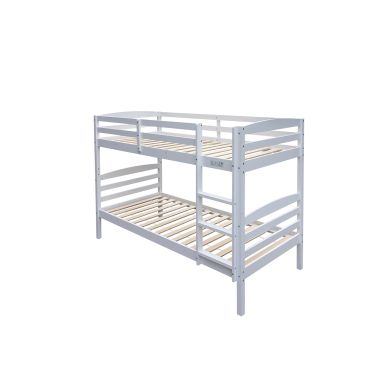
Our bunk beds are 140 to 182 cm high, in wood or metal, in white, grey or natural. There is also a red fire truck bunk bed. Some split into two separate beds later on. Others have a wider bottom bed, so three children can share one bunk bed.
Loading...
How to choose a bunk bed
- Check the age: the top bunk is not suitable for children under six. Younger children sleep in the bottom bed.
- Check the guard rails: under the European standard EN 747, the top of the mattress must stay at least 16 cm below the guard rail. This is why each bunk bed has a maximum mattress thickness.
- Check the ceiling: a child on the top bunk needs room to sit up. Our tallest bunk bed needs a ceiling of about 240 cm.
- Two children or three: a bunk bed for three has a wider 140x200 bed at the bottom.
Common mistakes when choosing a bunk bed
- A mattress that is too thick: it lowers the guard rail below a safe height. Stay within the maximum in the manual.
- Placing it under a light or ceiling fan: a child on the top bunk can reach it. Choose a spot with nothing hanging above.
- Leaving a dangerous gap at the wall: keep the gap between the top rail and the wall under about 7 cm, so a child's head cannot get stuck.
- Never checking the bolts and screws: check and tighten them regularly, as bunk beds take a lot of climbing.
What size bunk bed for a small bedroom?
A bunk bed for two takes the floor space of one single bed, about 1 metre by just over 2 metres. If your ceiling is low, choose our lowest bunk bed or a mid sleeper instead. Some of our bunk beds split into two single beds when the children want separate rooms.
Dimensions and materials
- Mattresses: 90x200 on each level, or 140x200 at the bottom of a bunk bed for three.
- Height: 140 to 182 cm.
- Length: about 207 to 227 cm.
- Width: about 97 to 105 cm for two children, about 147 to 158 cm for three.
- Materials: solid pine, MDF (wood fibreboard) or metal.
- Colours: white, grey, natural and red.
- Included: a ladder on every model, and slatted bases on most. Check the guard rail height and the maximum mattress thickness in each manual.
Caring for your bunk bed
Wipe the bed with a slightly damp cloth and a little washing-up liquid if needed. Avoid cleaners with alcohol or ammonia.
Our range of bunk beds
- Wooden bunk beds in three heights: in white or natural, and in grey at the tallest height.
- Bunk beds for three: in wood or dark grey metal, with a wider bed at the bottom.
- Bunk beds that split: in solid pine or grey metal.
- Fire truck bunk bed: a red fire truck with cut-out windows and printed hoses.
Why buy a bunk bed from Maci Home?
- Heights for different ceilings: from low bunk beds to tall ones, so there is one for most rooms.
- For two or three children: most take two 90x200 mattresses, and the bunk beds for three have a wider bed at the bottom.
- Slatted bases on most: most of our bunk beds come with their bases, so you only add the mattresses.
Goes well with
- Single beds later on: the splitting bunk beds become two single beds when the children move to separate rooms.
- A toddler bed for the youngest: a child under six can start in a toddler bed and move up later.
- Loft beds and mid sleepers: for one child, a loft bed or mid sleeper frees the floor in the same way.
Frequently asked questions
From what age is a bunk bed suitable?
The top bunk is for children from six, as the manufacturer advises. Younger children can use the bottom bed.
What size bunk bed do I need?
A bunk bed for two takes two 90x200 mattresses and is about 2 metres long. A bunk bed for three is wider, with a 140x200 bed at the bottom.
Which mattress does a bunk bed need?
A 90x200 mattress on each level, or 140x200 at the bottom of a bunk bed for three. Mattresses are sold separately.
What types of bunk beds are there?
Bunk beds for two and for three, in wood or metal. Some split into two single beds, and one is shaped like a fire truck.
How high is a bunk bed?
Ours are 140 to 182 cm high in total. Check the ceiling above the top bunk before you order.
 Free Delivery
Enjoy free shipping in the Netherlands and Belgium for orders over €100, and €5.99 delivery below that
 14 Days to Return
Changed your mind? Return your items within 14 days
2-Year Legal Warranty
Every product is covered by the 2-year legal warranty
Collect It in Temse
Choose free pickup at our warehouse in Temse when you order. Our team helps you load it into your vehicle.
Missing a Part?
Email us and we'll send the missing or replacement part straight away.
 Expert Advice
Get personalised guidance from our team of specialists